

The Way of Water
Half-Life 2 | Hammer
Hammer (Source) // Half-Life 2
Systems, Layout & Flow, Combat
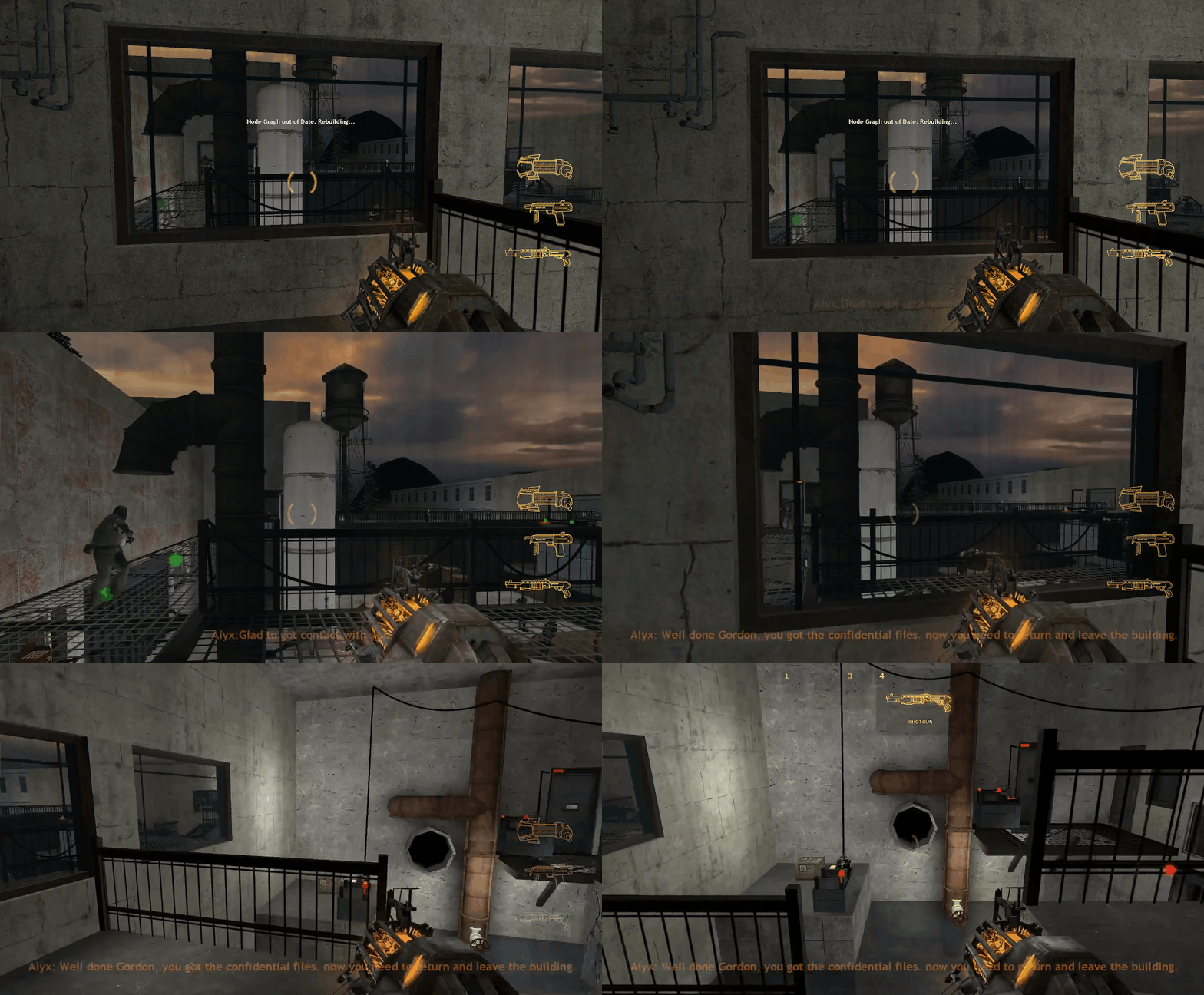
The Way of Water is a level in Half-Life 2. The player Gordon Freeman kills enemies and uses the water level to escape the building to complete the level. The player needs to use the battery to fill in the battery slot and close the electricity door to allow the water height limit (barrel problem).
5-10 minutes of gameplay
2+ major combat encounters
1+ multi-step puzzles
2-3 enemy types
1-3 weapons
3-5+ significant gameplay areas
Design Goals
This level explores how water affects player navigation in Half-Life 2. In combat, my goal was to encourage varied strategies by diversifying encounters. Spatially, I incorporated path reuse to enhance both combat and puzzles—prompting players to revisit and repurpose previous areas to progress.
Water Puzzle
To explore how water level affects pathing, I designed three puzzle rooms with varied platform heights that initially restrict movement. By actively adjusting the water level, players unlock new routes and progress through the level.

The water pipe marks the player's goal beyond the obstacle. By raising the water level, players overcome the restriction and reach the next target.
The red water pipe draws player attention through its color and vertical placement, serving as a visual guide. The attached red valve wheel clearly signals it as an interactive mechanism.

Dynamics Combat
The battle setting is alternated with the player's puzzle task to ensure the smoothness of the level flow. For example, after completing the basic tutorial in the start room, the player enters room 1 and gets some supplies as a reward.

Before the main combat, I introduced warm-up encounters to ease players in—providing an early advantage and ensuring a gradual ramp-up rather than abrupt high-intensity challenges.

For example, in Combat 1 (Outdoor 3), I used large props to divide the space into two areas. This gives players time to enter, prepare, and plan their strategy before fully engaging.

For example, the room in combat 2 (doom 4) was divided into a small room and a large room.
Conveyance
The conveyor setup consists of three parts, The water, The battery and door part, The overall flow and lead lines.

Water pipes and fountain effects are positioned directly in the player’s line of sight from the valve wheel. This ensures players immediately see the results of their actions and understand how the level has changed.
Indicator lights and cables help players quickly link the door to its corresponding battery slot. Matching material textures between the slot base and the door further reinforce this visual connection.
A distant water tower model serves as the final goal and visual landmark. It helps guide player direction. If lost, players can use it to orient themselves and navigate toward the level’s end.

Narrative Pacing
The biggest challenge was using the Hammer editor to simulate stable water-based mechanics.
In the AM version, I used logic_relay to enable/disable water level limits. However, this method was prone to issues. If players changed the battery placement order or repeatedly inserted/removed batteries, it could desynchronize the water level logic.
In the Launch version, I revised the system: each battery slot contains two separate triggers—one for the door, and one for the water level—ensuring more stable and reliable progression.

The door trigger remains constantly enabled, while the water-level trigger only activates when a lower-level battery is inserted.
This setup ensures that water can only rise when lower areas are sealed, making the system more stable than the earlier logic_relay-based method.
Postmortem
What Went Well?
-
I communicated with stakeholders in the early stages of design.
-
The water puzzle in the level was the most successful.
What Went Wrong?
-
I wish I had spent time understanding the logic of hammer editor earlier, including making water work earlier.
-
I didn't realize is that even if the water logic needs to be repaired
What I Learned?
-
think I have a deeper understanding of the flow in this level.